Beginner Trading Guide
Basics of Day Trading: A Beginner's Guide to Getting Started Without Getting Wrecked
Day trading can look easy from the outside, but beginners need to understand the risk, the terminology, and the emotional side before risking real money.
In this guide
What Is Day Trading?
Day trading is the act of buying and selling a financial asset within the same trading day. Most day traders are not trying to invest in a company for years. They are trying to profit from short-term price movements that happen during the day.
For example, a day trader might buy a stock at 9:45 AM and sell it at 10:20 AM. Another trade might last five minutes. Some trades may only last seconds.
Beginner takeaway: Day traders care about price movement, volume, momentum, and timing more than long-term company fundamentals.
Day Trading vs. Investing
Day trading and investing are very different. An investor might buy shares of a company because they believe it will grow over the next five to ten years. A day trader may trade that same stock but only care about what happens today.
Investors Usually Focus On
- Company earnings
- Long-term growth
- Dividends
- Industry trends
- Business fundamentals
Day Traders Usually Focus On
- Price action
- Chart patterns
- Volume
- News catalysts
- Support and resistance
Support and Resistance Basics
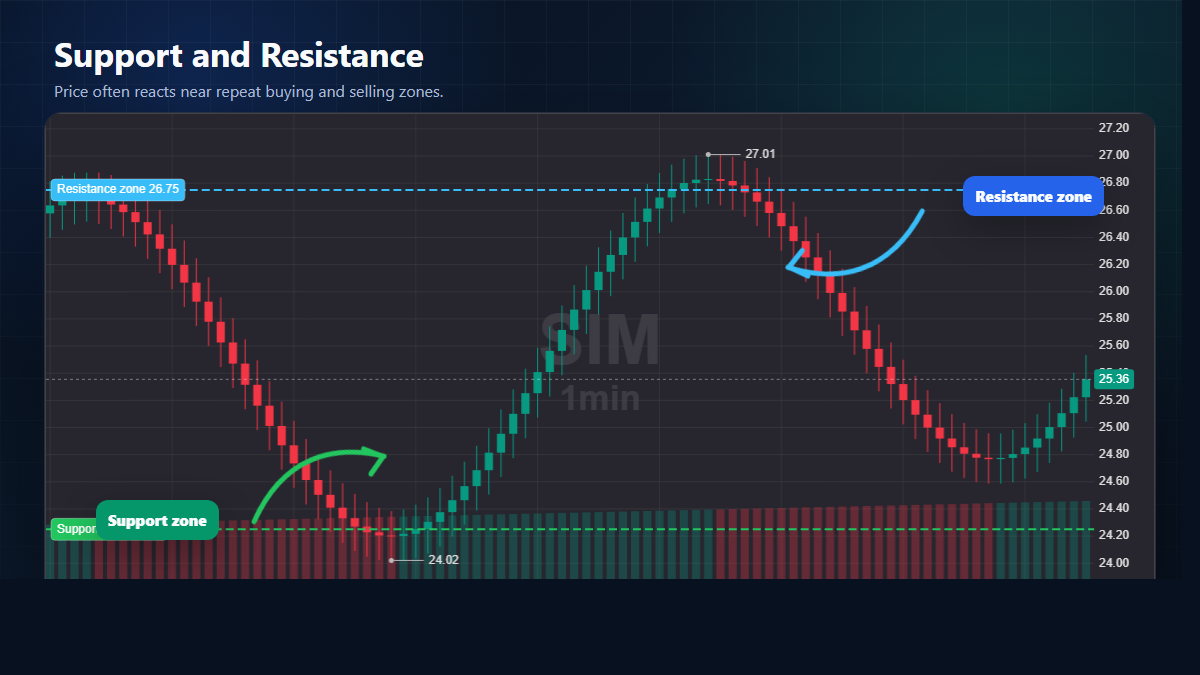
Support and resistance are price areas where traders expect a stock to react. Support is an area where buyers have previously stepped in. Resistance is an area where sellers have previously pushed price back down.
How Day Traders Make Money
Day traders make money by trying to buy low and sell higher, or in some cases, sell short and buy back lower.
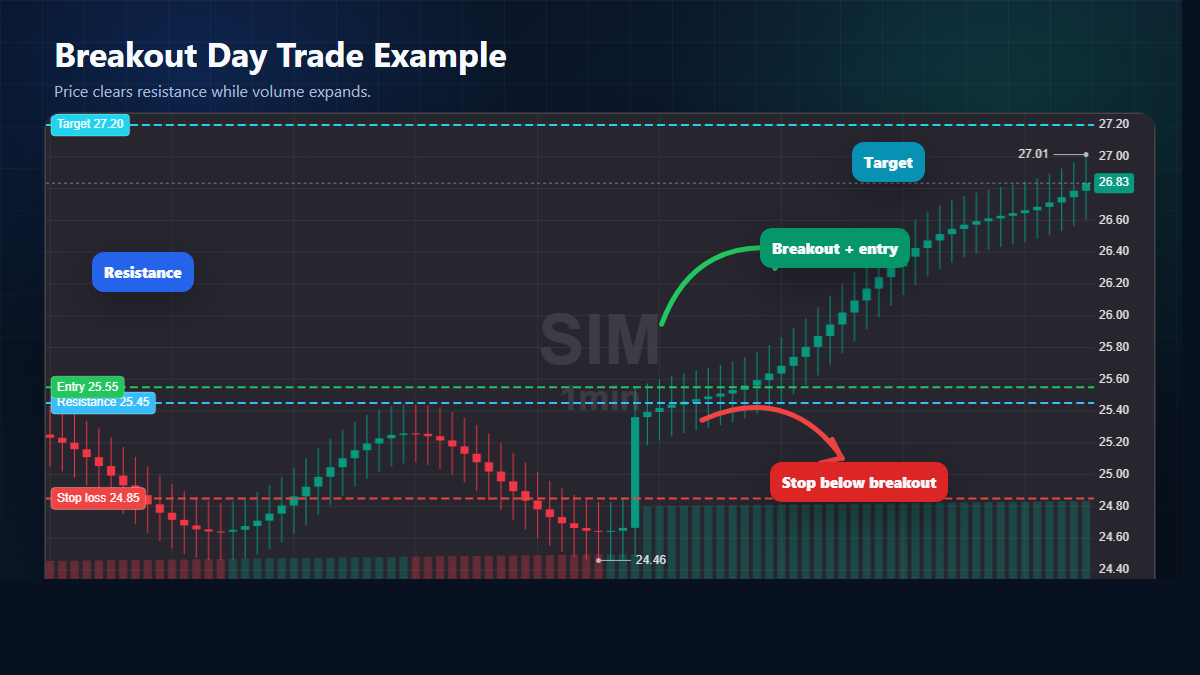
The simple version sounds easy: buy a stock at $10.00, sell it at $10.40, and make $0.40 per share. The hard part is that stocks do not move in straight lines.
Risk Management: The Part Beginners Ignore
Risk management is probably the most boring part of day trading. It is also the part that keeps you alive.
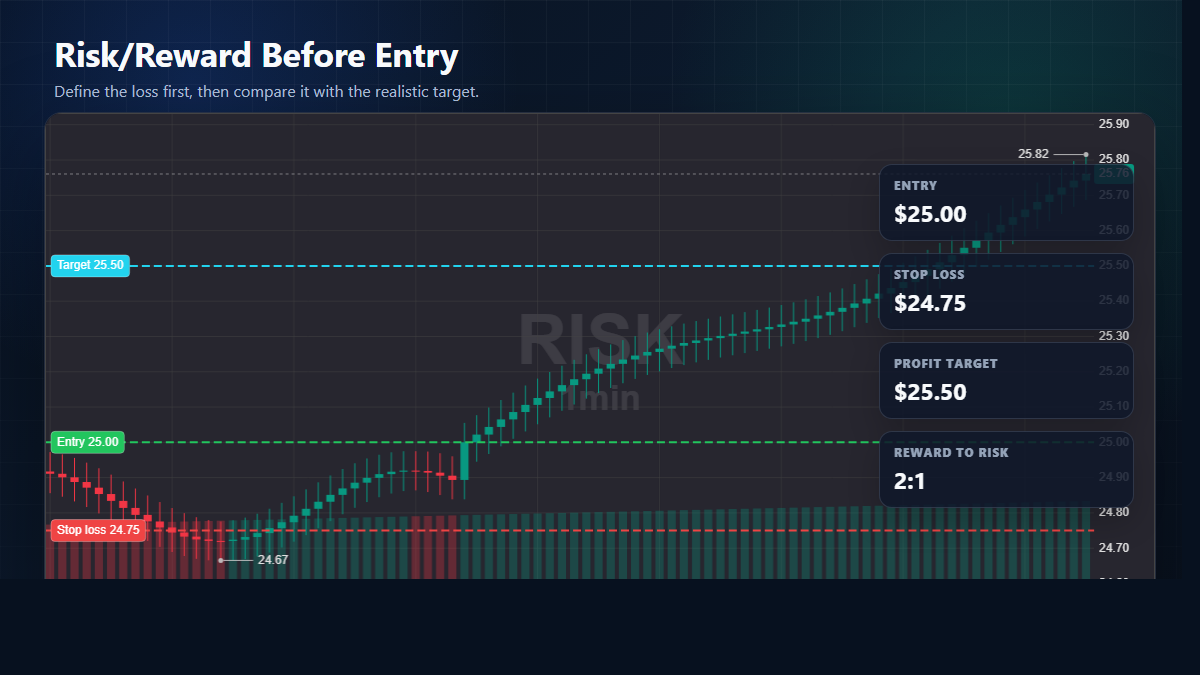
Example Risk Calculation
Entry price: $25.00
Stop loss: $24.75
Risk per share: $0.25
100 shares = $25 risk
A lot of beginners focus only on how much they can make. Experienced traders focus heavily on how much they can lose.
Why Beginners Should Practice First
A day trading simulator gives beginners a safer place to learn. With Simul8or, you can practice trading without risking real money.
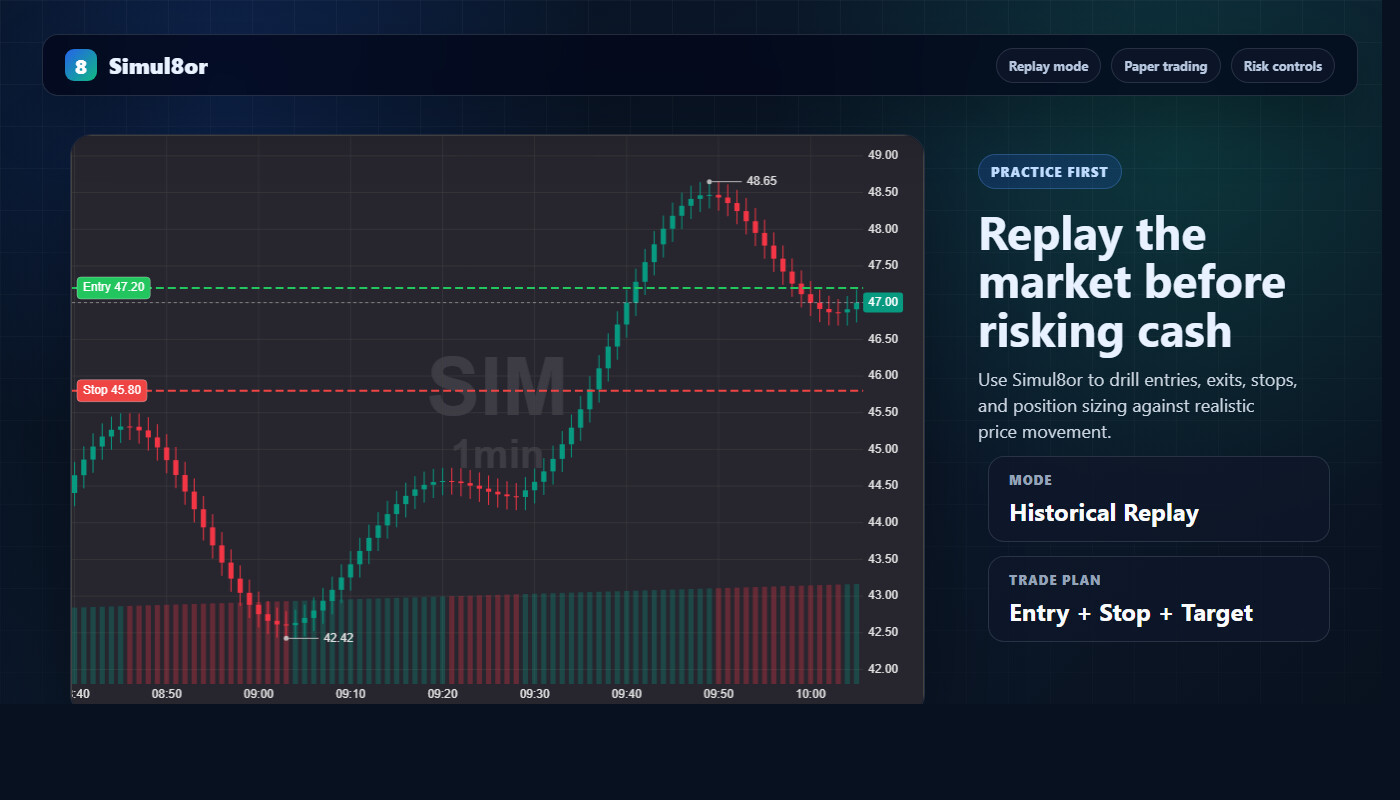
Practice Day Trading Without Risking Real Money
Use Simul8or to test trade ideas, practice entries and exits, and learn how price action moves before putting actual cash on the line.
Try Simul8or FreeFinal Thoughts: Learn Before You Burn
Day trading can be exciting, but beginners need to respect the risk. There is no magic indicator, secret chat room, or perfect strategy that guarantees profits.
The best thing a beginner can do is slow down, learn the basics, and practice before risking real money.